
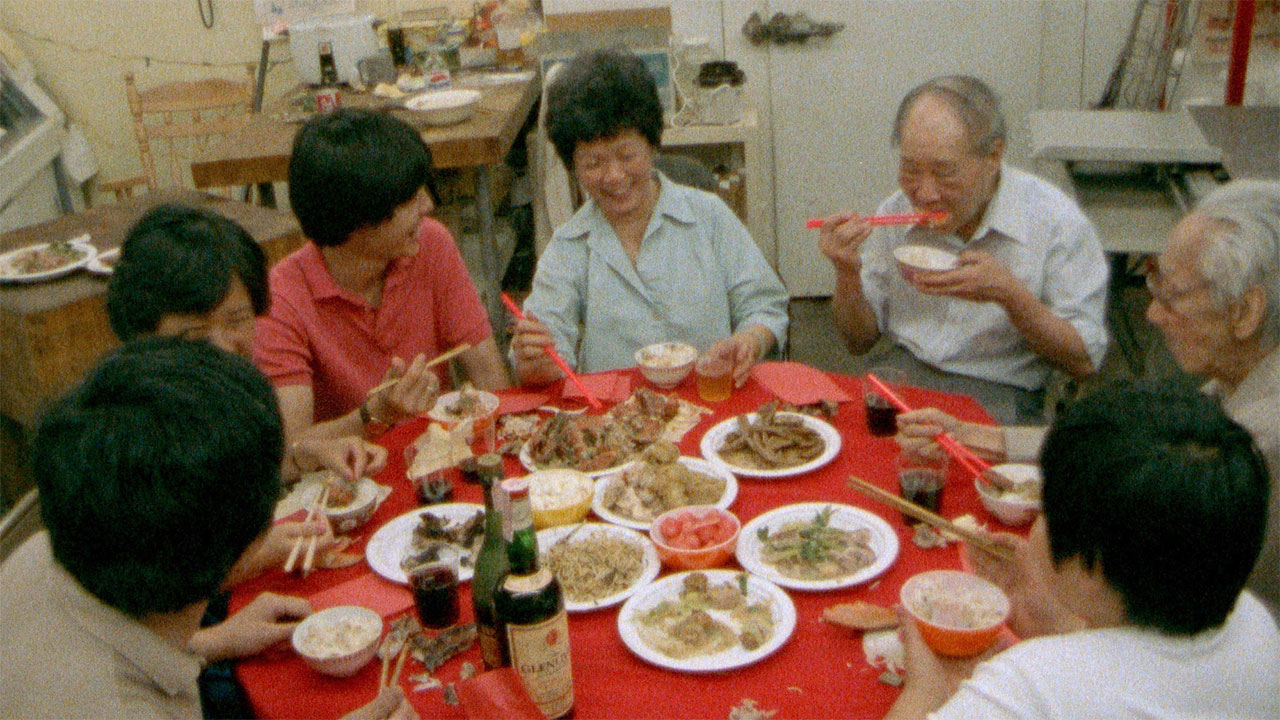
Mississippi Triangle
Christine Choy, Worth Long and Allan Siegel · 1984 · 110 minutes
Nov. 13 · Regal 1 · 5:00 p.m.
An intimate portrait of life in the Mississippi Delta, where Chinese, African Americans, and whites live in a complex world of cotton, labor, and racial conflict.
Programmer’s Note
The recent success of Ryan Coogler’s Sinners (2025) brought new attention to the communities of Chinese immigrants in Jim Crow Mississippi. Filmmaker Christine Choy first learned about them in 1978, when an assistant on another film mentioned that he’d grown up in the Mississippi Delta, the stretch of cotton country running south from Memphis to Vicksburg. “I didn’t know there were Chinese in Mississippi,” she later told Cinéaste. Brought in soon after the Civil War to replace freed slaves in the fields, many of those immigrants soon left the plantations to open small groceries serving Black sharecroppers. That left them in an uneasy middle position in a society built, as Choy put it, “for two races: master and slave.”
Six years later, Choy, Worth Long (a folklorist and former SNCC organizer), and Allan Siegel completed Mississippi Triangle, one of the strangest and most ambitious experiments in American documentary. “The theory of the melting pot is ludicrous,” Choy said. “That’s why we shot it with three crews: one black, one Asian, and one white.” Each crew filmed its own community, and the people being filmed didn’t know the three were working together. The co-directors met once, at a Pizza Hut in the middle of the night, to swap equipment.
There’s no narrator in Mississippi Triangle and no experts, only Delta residents telling their own stories. Choy complained that filmmakers came to the South looking for “direct conflict.” She was after the conflicts beneath the surface, including those in her own community. When Chinese elders tried to keep her from interviewing Arlee Hen, the daughter of a Chinese railroad worker and a Black mother, Choy announced she was leaving town, then sneaked back and spent two days filming in Hen’s home. In his review for Screen Slate, Emerson Goo notes that Hen gets the final word in the film when she explains that she won’t be buried in the Chinese cemetery because of her mixed race. “The pain of her exclusion closes Mississippi Triangle,” goo writes, “a film which shows, to paraphrase a great Southern writer, that the past really isn’t past.”
Mississippi Triangle was preserved by BB Optics, Inc. with the support of the National Film Preservation Foundation and New York Women in Film & Television’s Women’s Film Preservation Fund.
Born in Shanghai to a Chinese mother and a Korean father, Christine Choy, aka Chai Ming Huei (1952-2025), grew up in Korea and moved to New York at 14. The anti-war movement drew her to filmmaking, and in the early 1970s she helped found Third World Newsreel to tell stories the mainstream media ignored—from the Attica rebellion (Teach Our Children) to Chinatown’s garment workers (From Spikes to Spindles). A Guggenheim Fellowship led to Mississippi Triangle (1984). Who Killed Vincent Chin?, which she co-directed with Renee Tajima-Peña, earned an Oscar nomination and a Peabody, and was added to the National Film Registry in 2021. Choy joined the faculty of NYU’s Tisch School of the Arts in 1988. She died in December 2025.