
Everything Else is Noise
Nicolás Pereda · 2026 · 71 minutes
Nov. 15 · Regal 2 · 4:30 p.m.
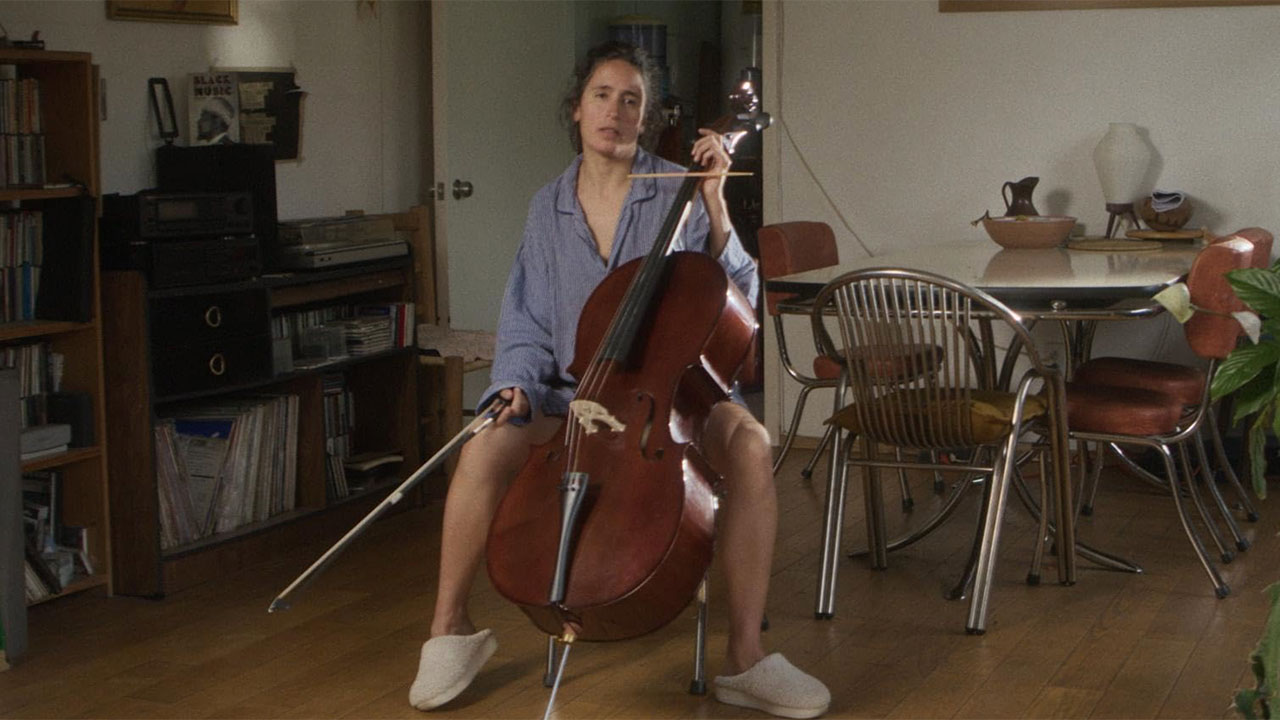
In Mexico, musician Tere hosts fellow composer Rosa for a TV interview. Their conversation wanders as unexpected guests arrive. A witty, absurdist comedy that lampoons art-world phoniness and pretension while honoring female friendship.
Programmer’s Note
For nearly two decades, Nicolás Pereda has been building one of the most distinctive bodies of work in contemporary cinema. The Mexican Canadian writer/director first broke through when Summer of Goliath (2010) won the Orizzonti Award at Venice. Since then he has made a film almost every year, most of them with the same small troupe of actors playing versions of themselves. Everything Else is Noise premiered in the Forum section of this year’s Berlinale, then became his first film to be selected for the Main Slate of the New York Film Festival. Beatrice Loayza of The New York Times (a member of our 2023 American Regional Cinema Competition jury) called it “one of the finest films at the festival.”
Pereda’s work tends to get filed under “slow cinema”: long takes, slight plots, deadpan performances. That label can scare off newcomers, but rest assured that Everything Else Is Noise is very funny, and Pereda is very much in on the joke. When a character mentions a boring art film he’d seen about three people who keep falling asleep, it’s a reference to Pereda’s own Minotaur (2015).
Here, Rosa (Rosa Estela Juárez Vargas), a composer, borrows the Mexico City apartment of her friend Tere (Teresita Sánchez) to tape a television interview. The interviewer, Lázaro (Lázaro G. Rodríguez), arrives with a cameraman and a set of questions Tere had anticipated even before they walked in the door. Nothing about the shoot goes to plan. Rosa’s short, vague answers are every interviewer’s worst nightmare. A neighbor’s dog barks incessantly. Tere starts volunteering answers of her own, each stranger than the last, and Lázaro is far too pleased with himself to notice. (One of her funniest stories involves her sense of smell, which Pereda borrowed from a conversation between the artists Luchita Hurtado and Julie Mehretu in a Tacita Dean film.)
An example for low-budget filmmakers everywhere, Pereda shot Everything Else is Noise in a few days with a tiny crew, almost entirely in a friend’s apartment, where he lived for the duration. The noise wasn’t part of the original concept for the film. The apartment turned out to be “impossibly noisy,” he told In Review Online, so Pereda wrote the city into the script and changed the title. Sound, indeed, became a storytelling tool. For one scene he recorded only the audio of two men chatting at a café down the street, then laid it over footage of the women back in the apartment. It’s a cheap trick in the best sense, and an example of what Pereda calls sound’s power to put you “in two places at once.”
Nicolás Pereda was born in Mexico City and holds an MFA in film from York University. His films include the features Perpetuum Mobile (2009), Summer of Goliath (2010), Greatest Hits (2012), Killing Strangers (2013), The Absent (2014), Minotaur (2015), My Skin, Luminous (2019), Fauna (2020), Lázaro de Noche (2024), and Copper (2025). Everything Else is Noise is his latest film.