
Clarissa
Arie and Chuko Esiri · 2026 · 134 minutes
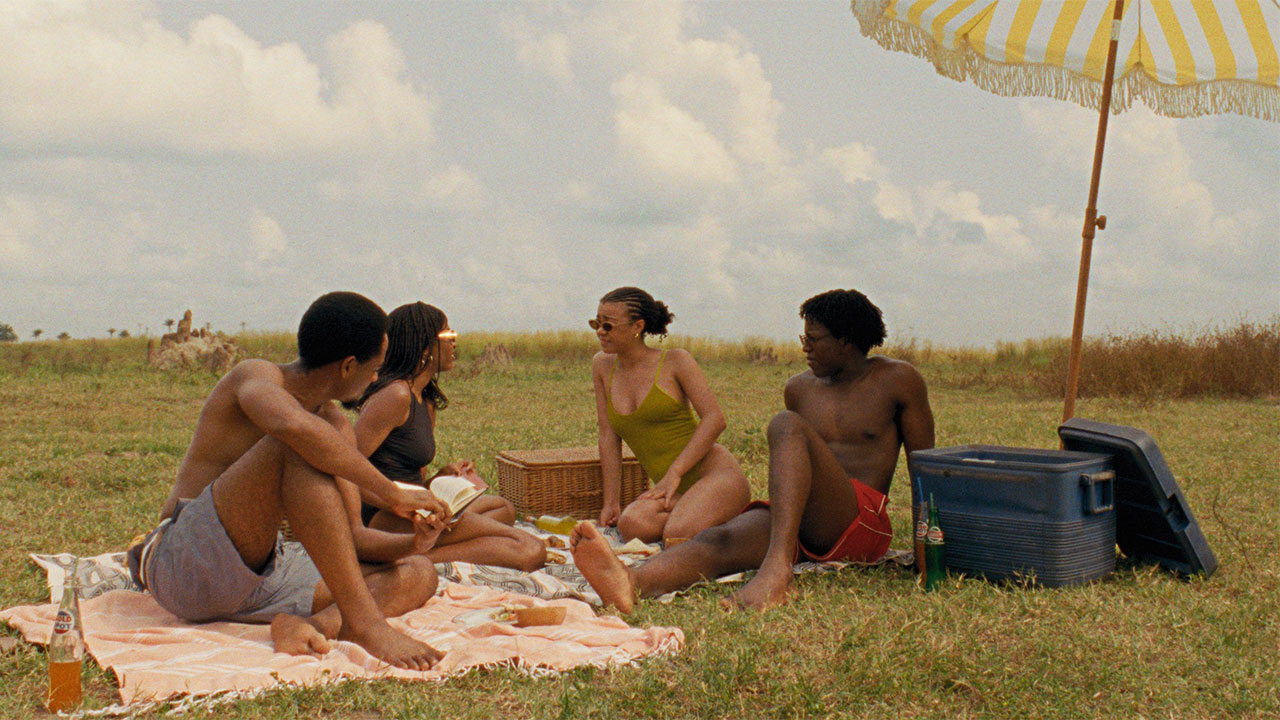
An adaptation of Virginia Woolf’s Mrs. Dalloway, Clarissa follows a Lagos society wife preparing for a party while reflecting on her youth and the choices that led her to marry a respected man instead of her poet boyfriend.
Programmer’s Note
In his review of Clarissa for Reverse Shot, Michael Koresky points to a small but significant detail in Mrs. Dalloway (1925): when Clarissa Dalloway stops in Piccadilly to glance in the window of Hatchards bookstore, she notes copies of “Mrs. Asquith’s Memoirs and Big Game Shooting in Nigeria, all spread open.” The first is a real memoir by the wife of a former prime minister. The second appears to be Woolf’s own invention. The pairing, Koresky argues, is Woolf’s verdict on an aristocracy that treated its colonies as sport. Her novel, he writes, “wears the author’s comfortable contempt of British empire as easily as a springtime shawl.”
A century later, twin brothers Arie and Chuko Esiri have taken up Woolf’s critique by transposing her novel to contemporary Nigeria, which remained under British rule until 1960, and they update the context accordingly. Woolf’s version, for example, features a troubled veteran, Septimus, who is haunted by his experience of World War I; in Clarissa, Septimus is traumatized by the fight against Boko Haram.
Notably, the Esiris have turned Woolf’s radical modernist experiment into a kind of “tradition of quality” costume drama, Merchant-Ivory by way of Masterpiece Theatre, which is itself a somewhat radical gesture. Nigerian actors, in Nigeria, performing the manners of the English upper class — the servants, the gloves, the garden parties — amounts to a kind of posh English drag, the sort of thought experiment one might argue over in a postcolonial theory seminar. The Esiris know exactly what they’re doing. Chuko told Deadline that Nigeria’s conservative families “really [do] feel like a period drama,” and he wondered why British producers don’t hire more African directors for period pieces: “we know this!”
Shot on 35mm, Clarissa is beautifully filmed, beautifully staged, and beautifully performed. It moves between Clarissa’s present and a summer some thirty years earlier with no title cards or timestamps to mark the transitions. As Koresky observes, “the word ‘flashback’ all but loses its meaning.” As Clarissa, India Amarteifio (Queen Charlotte: A Bridgerton Story) grows into Sophie Okonedo (also starring in our opening night film, Mouse), Ayo Edebiri into Nikki Amuka-Bird, and Toheeb Jimoh into David Oyelowo. The older and younger actors have been cast so precisely the cuts feel like time travel.
Clarissa premiered at the 2026 Cannes Film Festival before having North American premieres in Toronto and New York.

Arie Esiri was born in Warri, Nigeria. His filmmaking credits include the short film Goose (2017), co-directed with his brother Chuko, and the solo short Because Men in Silk Shirts on Lagos Nights (2018). He co-directed the feature Eyimofe: This Is My Desire (2020) with Chuko. Clarissa is his latest film.

Chuko Esiri was born in Warri, Nigeria. His writing and directing credits include the short film Goose (2017), co-directed with his brother Arie, and the solo short film Besida (2018). He wrote and co-directed the feature Eyimofe: This Is My Desire (2020) with Arie. Clarissa is his latest film.