Announcing Free Film Screening Series at Regal Riviera
April 17, 2026
FILM FEST KNOX announces a Free Film Screening Series to be held in partnership with The Public Cinema at the Regal Riviera monthly at 7PM starting April 22, 2026, continuing until September. The goals of the series are to extend FILM FEST KNOX’s programming throughout the year and to create community-building opportunities for Knoxville’s film fans and film workers.
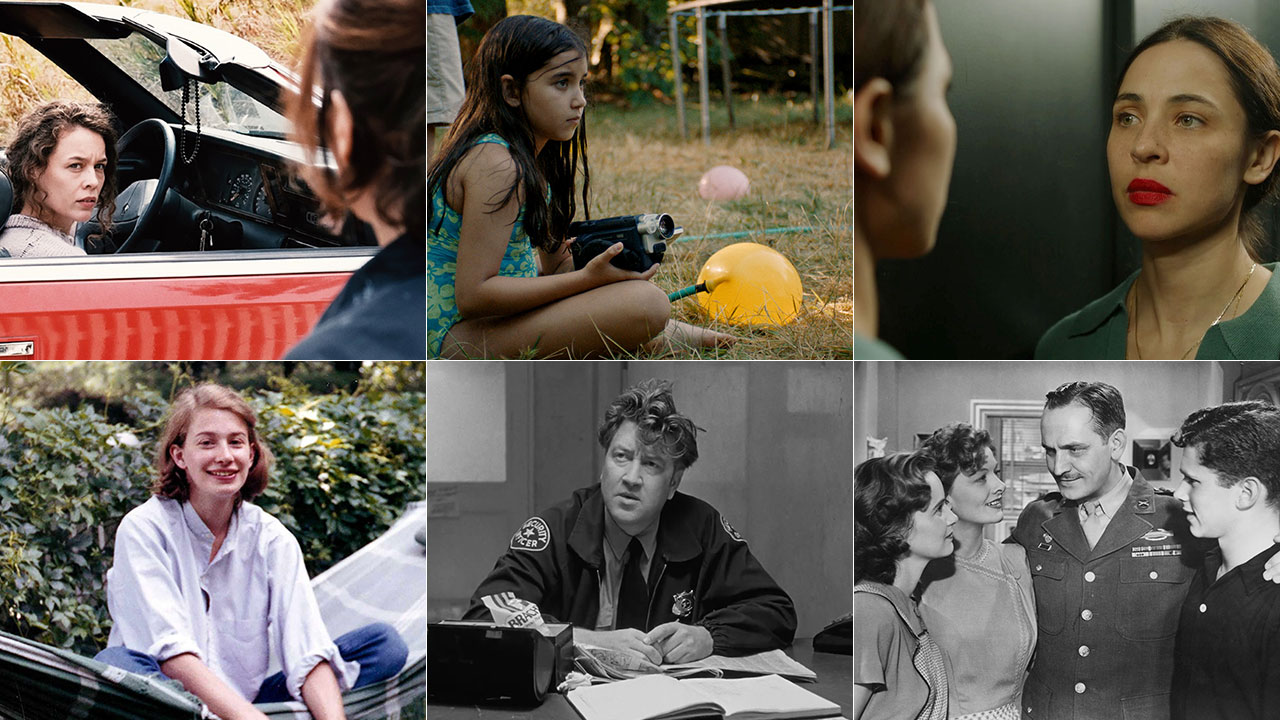
2026 FILM FEST KNOX: Free Film Screening Series
- April 22: Miroirs No. 3
- May 27: Blue Heron
- June 24: The Currents
- July 22: Mary Oliver: Saved by the Beauty of the World
- August 26: Nadja
- September 23: The Best Years of Our Lives
“As in the old days of The Public Cinema, the goal of the FILM FEST KNOX’s monthly series is simply to share the best new films that wouldn’t screen in Knoxville otherwise,” said Darren Hughes, Artistic Director of FILM FEST KNOX and Co-Founder of The Public Cinema. “This year’s lineup features several recent highlights from the world’s top festivals, along with two important restorations of American classics.”
“This free film screening series is a great way to extend FILM FEST KNOX programming year-round,” said Curt Willis, Sr. Director of the Visit Knoxville Film Office. “We want to invite the community to stay involved with us as we move toward another incredible festival this November.”
MIROIRS NO. 3 (2025, dir. Christian Petzold)
April 22
Written and directed by the acclaimed director Christian Petzold, Miroirs No. 3 follows Laura (Paula Beer), a depressed music student who, after surviving a car crash, takes shelter in an idyllic home in the German countryside. Her mysterious hosts care for Laura with unsettling devotion, and the reasons for their behavior only slowly surface.
Miroirs No. 3 premiered in the Directors’ Fortnight section of the 2025 Cannes Film Festival and was in the NYFF Main Slate competition, where it was described as “an economical and beautifully crafted work about the mystery of human interaction.”
One of Germany’s foremost auteurs with more three-decades of creative contributions, Petzold has been recognized by the world’s leading festivals and critics. A devoted cinephile, Petzold makes films in a classical style, often returning for inspiration to his fascination with Hitchcock and Hollywood cinema.
BLUE HERON (2025, dir. Sophy Romvari)
May 27
Blue Heron stars Eylul Guven as Sasha, the eight-year-old daughter of a Hungarian immigrant family who relocate to Vancouver Island in the late 1990s. Young Sasha’s childhood becomes increasingly charged when her older half-brother Jeremy begins displaying dangerous behavioral issues.
Blue Heron had its world premiere at the 78th Locarno Film Festival, where writer-director Sophy Romvari won the Swatch First Feature Award, and had its Canadian premiere at TIFF, where it was named to Canada’s Top Ten list for 2025. Richard Brody of The New Yorker praises Romvari for bringing “keen observation and wondrous imagination to the quasi-autobiographical story.”
Romvari built her reputation with a series of acclaimed shorts, which are currently being featured on The Criterion Chanel. (Blue Heron is being distributed by Criterion’s sister company, Janus Films and will eventually be added to the Criterion Collection.) Romvari’s short films have also received a retrospective at the Museum of the Moving Image.
THE CURRENTS (Las corrientes, 2025, dir. Milagros Mumenthaler)
June 24
While visiting Switzerland to accept an award for her work in the fashion industry, Argentinian designer Lina (Isabel Aimé González Sola) is seized by the sudden urge to jump off a bridge into an icy river. She survives the plunge, returns to Buenos Aires, and tells no one, but a transformation has taken place within her. Left with a paralyzing fear of water, she finds it impossible to re-adjust to her former identity as wife, mother, and artist.
The Currents premiered at the Toronto International Film Festival, followed by the San Sebastián International Film Festival, the New York Film Festival, and the Chicago International Film Festival. The Hollywood Reporter praised the film’s “elegance and empathy” in capturing “the gaping chasm between how we present and who we are.”
Writer-director Milagros Mumenthaler was born in Argentina in 1977 and studied film in Buenos Aires; her debut feature Back to Stay won the Golden Leopard at Locarno.
MARY OLIVER: SAVED BY THE BEAUTY OF THE WORLD (2026, dir. Sasha Waters)
July 22
The first documentary portrait of the beloved American poet, Mary Oliver: Saved by the Beauty of the World, presents Oliver as a best-selling Pulitzer Prize-winner who was queer and intensely private who stalked the ponds and forests of Cape Cod for nearly fifty years.
The film shares never-before-seen personal photos, notebooks, and correspondence from Oliver’s archive, along with readings by Helena Bonham Carter, Steve Buscemi, Stephen Colbert, Lucy Dacus, and Oprah Winfrey, and interviews with former U.S. Poet Laureate Ada Limón and writer John Waters.
Mary Oliver: Saved by the Beauty of the World had its world premiere at the True/False Film Fest and recently screened at DOC NYC. Director Sasha Waters is a documentary and experimental filmmaker at Virginia Commonwealth University; her previous film, Garry Winogrand: All Things are Photographable, was called one of the year’s best by The New Yorker and won a Special Jury Prize at SXSW.
NADJA (1994, dir. Michael Almereyda)
August 26
Merging elements from Dracula’s Daughter (1936) with André Breton’s surrealist novel Nadja (1928), and fusing shimmering black-and-white 35mm with hallucinatory Pixelvision video, Michael Almereyda’s cult film centers on New York-based vampire Nadja (Elina Löwensohn) as she draws close to her twin brother Edgar (Jared Harris) following their father’s death at the hands of Dr. Van Helsing (Peter Fonda).
Jordan Hoffman in Vanity Fair called it “the most stylish vampire movie of the 1990s… simultaneously funny and sexy… a deadpan, bloodsucking adventure that proved you didn’t need a big budget if you had attitude, a cool setting, and an aesthetic point of view.”
Almereyda, whose films include Experimenter, Tesla, and a modernized Hamlet, is one of American independent cinema’s most inventive figures. Nadja was executive produced and financed, in part, by David Lynch, who also appears in the film. Soon before he died, Lynch signed off on a long-in-the-works restoration, which has brought new and much-deserved attention to this remarkable “lost” film.
THE BEST YEARS OF OUR LIVES (1946, dir. William Wyler)
September 23
In celebration of the 80th anniversary of its initial release.
William Wyler’s 1946 masterwork follows three United States servicemen returning from World War II as they re-adjust to civilian life. The men come from different military branches and social class backgrounds, and the film is credited for its early, unflinching portrayal of PTSD and the difficulties of veterans’ reintegration into society.
Roger Ebert wrote that, seen decades later, it “feels surprisingly modern: lean, direct, honest about issues that Hollywood then studiously avoided.”
The Best Years of Our Lives won seven Academy Awards, including Best Picture and Best Director, and was among the first 25 films selected by the Library of Congress for preservation in the National Film Registry. Cinematographer Gregg Toland’s deep-focus photography and the casting of real-life amputee Harold Russell remain remarkable achievements. Wyler, born in Germany in 1902, directed a string of Hollywood classics including Mrs. Miniver, Roman Holiday, and Ben-Hur, for which he won three Academy Awards for Best Director — a record he shares with John Ford and Frank Capra.